Chang Doctrine
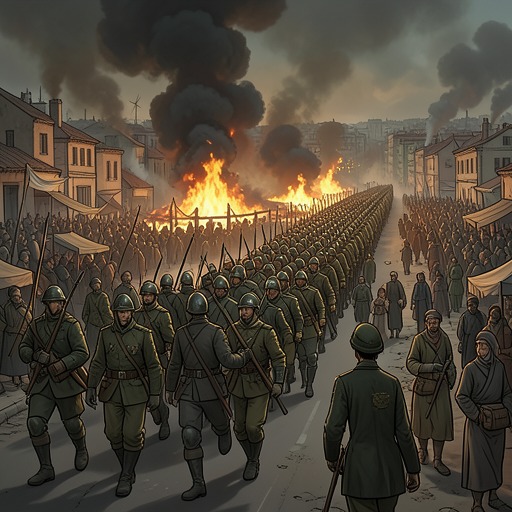
World War ZThe Chang Doctrine is South Korea’s adaptation of the Redeker Plan, a wartime survival framework designed for a society confronting an undead epidemic too large for conventional containment. Its decisive principle is that a state may preserve itself only by abandoning the attempt to save everyone, concentrating military strength in defensible safe zones, and managing civilian movement as part of the battle rather than as a separate humanitarian task.
Definition and Strategic Logic
The doctrine’s immediate precedent is the Redeker Plan. Redeker argued that the armed forces could no longer isolate the outbreak because they had been weakened and spread too thinly across the country. They therefore had to consolidate, withdraw into a special safe zone protected by mountains, rivers, or an offshore island, eradicate the infestation inside that zone, and defend it against further attacks.
The civilian component was even more radical. Only a small fraction of the population could be evacuated into the safe zone, where survivors would provide a labor pool for economic reconstruction and preserve the government’s legitimacy by demonstrating that its leaders were still protecting someone. The remaining uninfected refugees would be placed in isolated, defended zones and maintained as living bait, keeping the undead concentrated away from the retreating army. South Korea’s Chang Doctrine is identified explicitly as its national version of this plan, carrying the same logic of selective evacuation, strategic withdrawal, and survival through unequal protection.
South Korean Adaptation
The doctrine was difficult to implement in South Korea because the country was an open, fractured society dependent on international trade. Its citizens were individualistic, accustomed to protests and public disturbances, and less prepared for the extreme internal discipline demanded by an emergency system of centralized retreat. The contrast with North Korea is therefore essential: North Korea had militarized most of its population and inculcated obedience to the State, the Revolution, and the Great Leader, whereas South Korea had to impose a survival doctrine on a society that had not been organized for total war.
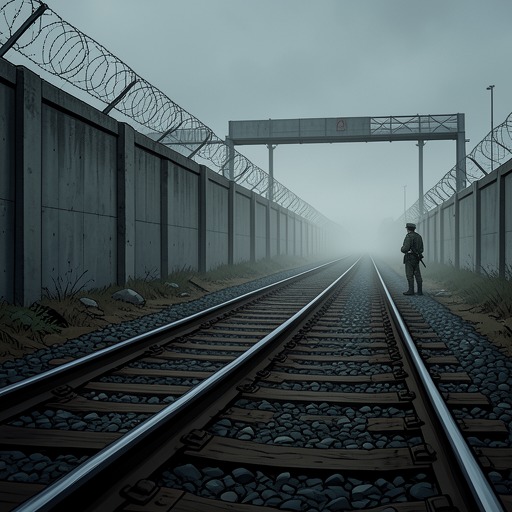
The scale of the crisis made that contrast more than theoretical. Outbreaks spread through Seoul, P’ohang, and Taejon; Mokpo was evacuated; Kangnung was isolated; and Inchon became South Korea’s counterpart to the Battle of Yonkers. The government nevertheless had to retain at least half of its active divisions along the northern border because many officials feared that Pyongyang might exploit the disaster and attack across the 38th Parallel. The doctrine thus operated under a double pressure: South Korea had to fight the undead while remaining prepared for a conventional invasion.
Implementation During the Great Panic
By the time the Chang Doctrine was being applied, South Korea was close to national collapse. Secret plans were being drafted for a Japanese-style resettlement, and covert teams were scouting locations in Kamchatka in case the doctrine failed. The survival of Tae Han Min’guk was therefore not presented as inevitable; it depended on the continued functioning of enough military units and safe zones to prevent the national system from breaking apart.
The doctrine’s importance was also psychological and political. South Korea’s older generations had lived with the constant possibility of invasion and retained a national vigilance that younger citizens, raised in peace and prosperity, did not share. As the crisis deepened, that older memory helped rally the country’s national spirit. The doctrine required more than military orders: it required a population to accept discipline, sacrifice, and the possibility that survival would mean abandoning communities that could not be held.
Social and Institutional Consequences
The Chang Doctrine belongs to a wider pattern of emergency governance in which bodies are examined, classified, isolated, trained, and moved according to perceived usefulness or risk. At Yeroham resettlement camp, refugees endured daily examinations of blood, skin, hair, saliva, urine, and feces before their papers were cleared. Elsewhere, infected people were identified through trained dogs, while postwar reconstruction classified workers according to whether they possessed skills needed for farming, construction, manufacturing, or defense.
That same logic appears in the Redeker model’s division between those admitted to the safe zone and those left behind as a defensive sacrifice. It also reappears after the war in the National Reeducation Act and the Community Self-Sufficiency Program, which converted refugees into labor, retrained a workforce in which more than 65 percent had been classified as having no valued vocation, and helped move society from a survival economy into war production. The doctrine therefore has an institutional afterlife: emergency sorting becomes reconstruction policy, and the question of who can be protected becomes intertwined with who can work, fight, or reproduce.
Historical Significance
The Chang Doctrine explains South Korea’s survival not as a clean victory but as an achievement purchased through triage, coercion, and the acceptance of unequal human value. It stands beside other wartime adaptations: refugee camps emptied through labor programs, dogs used to detect infection, and multinational forces formed after the continental United States was secured so that the remaining White Zones could be cleared. In each case, survival depends on converting fear into organized procedure.
Its deepest significance lies in the tension between collective endurance and moral exclusion. The doctrine made it possible to preserve a state that was nearing collapse, yet its underlying premise was that protection could not be universal. The same civilization that later rebuilt through community self-sufficiency and international cooperation first had to decide which populations could be concentrated, which could be delayed, and which could be exposed. The Chang Doctrine is thus remembered as both a practical instrument of national survival and a stark demonstration of the ethical price of surviving the Zombie War.